Destination timing · C02
Cascais and Nazaré: beach weather does not mean warm Atlantic water
The Portuguese coast creates an easy planning trap. July can be dry and pleasantly warm on land, yet the sea can remain cooler than many travelers expect from the phrase…
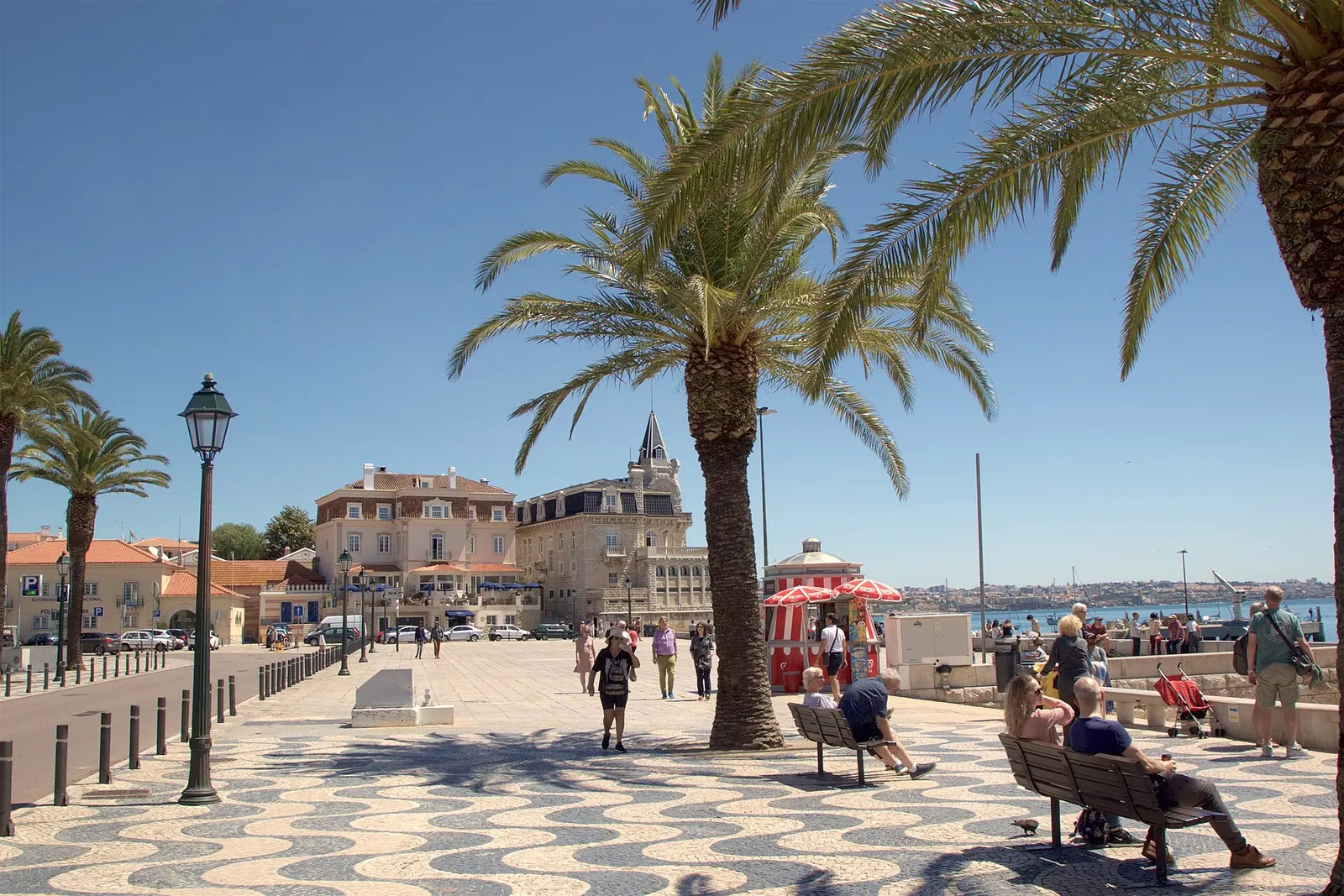
Read the coast as a timeline
In May, typical daytime highs are about 19.2 °C in Cascais and 18.8 °C in Nazaré. Sea temperatures sit near 16.4 °C and 16.3 °C. This is a land-led period for coastal walks, urban time and active travel, not a persuasive warm-swimming window.
June improves the conditions above the water faster than those below it. Cascais reaches roughly 21.3 °C by day and Nazaré about 20.7 °C, while the sea remains around 17.8 °C. The month begins the strongest climate window, but the reason is comfortable coastal weather rather than tropical water.
July and August deliver the highest land temperatures. Cascais averages about 22.7–23.2 °C by day; Nazaré about 21.8–22.4 °C. The sea, however, stays around 18.2–18.6 °C. A visitor may enjoy swimming at those temperatures, but the long-term evidence cannot support a blanket promise of warm water.
September is the best alignment rather than a dramatic peak. Cascais remains near 22.4 °C by day and Nazaré near 21.9 °C. The sea is about 18.8 °C at Cascais and 18.6 °C at Nazaré. It is still cool, but land and water are closer to their most useful combined position.
By October, daytime highs remain around 20 °C while monthly precipitation rises from the very dry summer level. October can work for an individual trip, but it is a weaker core search answer than June through September.
Cascais works as a mixed city-and-coast decision
Cascais is not evaluated as a beach in isolation. Its registered intent combines coast, beach and city travel. That matters: a month can rank strongly even when the ocean is cool because mild air also supports time outdoors and a wider Lisbon-coast itinerary.
This is why the four strongest editorial candidates are June, July, August and September. The decision is broader than swimming, and the article should say so explicitly.
Nazaré needs a different boundary
Nazaré's registered mix includes coast, beach and active or surfing-related travel. Climate averages can identify mild, dry months and describe the temperature of the sea. They cannot establish surf quality. Wave period, swell, wind and a current local forecast are outside this dataset.
That limitation prevents the page from turning climate evidence into a sports claim. June through September remain the strongest climate candidates, but anyone choosing a date for surfing needs information beyond monthly temperature and precipitation.
The decision rule
If warm water is non-negotiable, neither destination solves that requirement reliably through its summer climatology. If the aim is mild air, a dry summer pattern and an Atlantic setting, June through September is the evidence-led window. Cascais is the wider city-plus-coast choice. Nazaré is the more specific open-coast and active-travel choice.
Evidence: NASA POWER and NOAA OISST v2.1, 1991–2025. No claim about wave quality is derived from the climate averages.
The Portuguese coast month by month
Source: historical monthly averages, 1991–2025. Land: NASA POWER or the cited station series; sea: NOAA OISST v2.1. Not a forecast.
Destinations and strongest travel months
The four selected travel months:
The analysis uses historical monthly averages from 1991–2025, not a weather forecast. Actual conditions can vary by location, elevation and year.