Destination timing · C01
La Gomera or Porto Santo: choose the island by the timing of land and sea
These two Atlantic islands are often grouped under one promise: mild weather without the extremes of a continental summer.
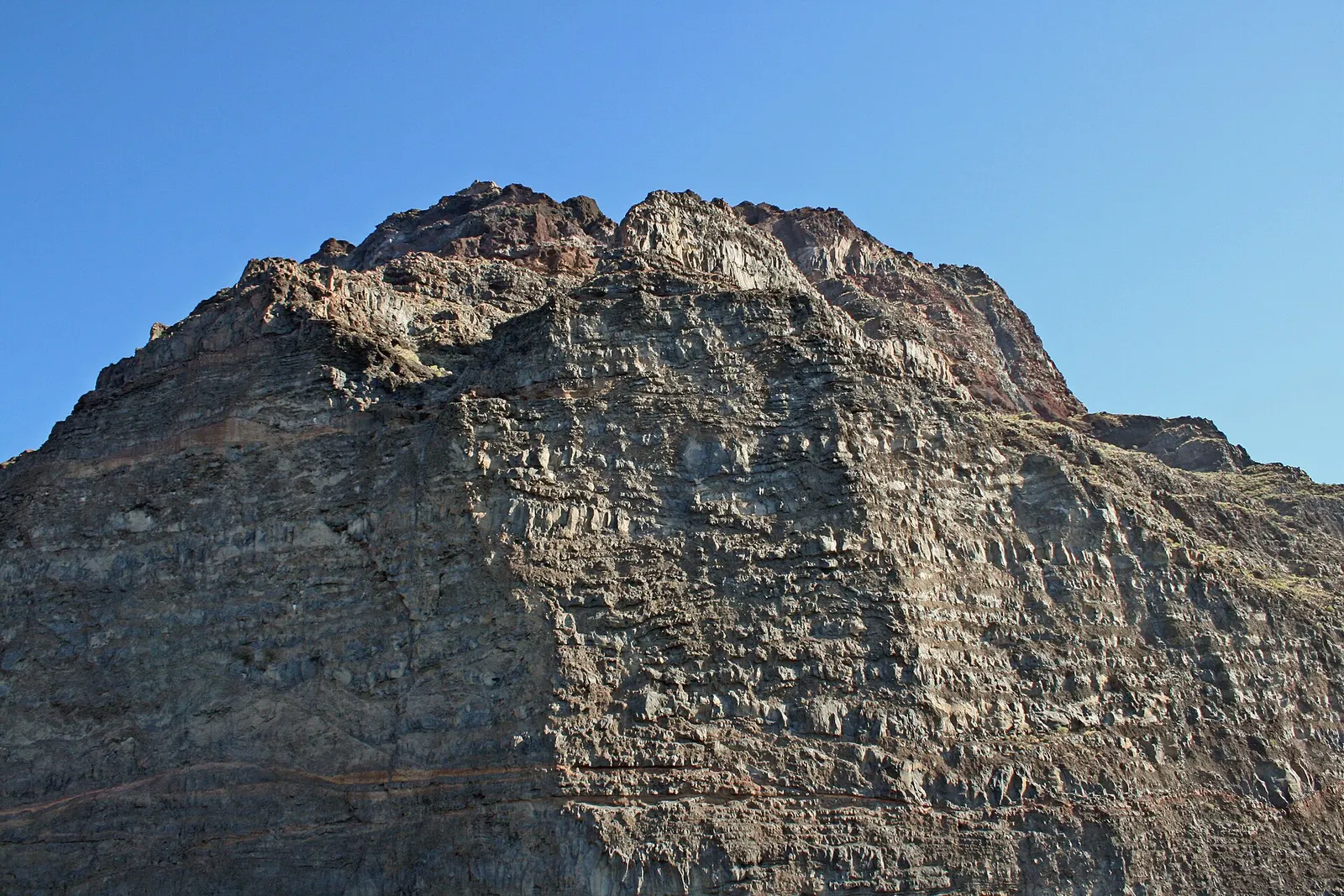
Start with the purpose, not the temperature ranking
For a walking-led trip, a daytime high in the low twenties can be an advantage. For a water-led trip, the same month may still feel early because the sea warms more slowly. The 1991–2025 series makes that separation visible:
- On La Gomera, the typical daytime high rises from about 22.9 °C in June to 24.9 °C in August and September. The sea rises from roughly 21.7 °C to 23.9 °C over the same period.
- On Porto Santo, the daytime high moves from about 20.5 °C in June to 23.2 °C in September. Sea temperature rises from about 20.6 °C to 23.5 °C.
June and September are therefore not interchangeable. June gives more moderate conditions on land. September retains summer-like air while the ocean reaches its strongest position.
La Gomera: the altitude warning matters
The reproducible climate footprint for La Gomera uses an official point at San Sebastián de la Gomera. It is a sound coastal anchor, but it does not flatten the island's topography. Conditions on an elevated path can differ materially from the coastal series, so one point must not be presented as an island-wide weather guarantee.
Within that limitation, June through September form an unusually close group in the intent-based assessment. Each scores 89 for the registered mix of hiking, nature, beach and winter-sun travel. October is only one point behind and keeps a sea temperature near 23.7 °C, extending the mild transition into autumn.
For a trip built around long days outdoors, June is the clearer early option. For a trip in which swimming matters more, September has the stronger data case.
Porto Santo: water becomes the tie-breaker
Porto Santo has a more beach-weighted profile. August and September lead its diagnostic assessment at 90. The air is similar in both months, while September has the warmest average sea at about 23.5 °C.
July is a transition rather than a duplicate. Its typical daytime high is about 21.8 °C and the sea about 21.9 °C. Those values can suit a mild beach trip, but they do not answer the same warm-water question as September. June moves further toward land activity: comfortable air, limited heat, and a sea only just above 20 °C.
A practical choice in three lines
Choose La Gomera in June when walking conditions matter more than peak sea temperature. Choose either island in September when the warmest available water is central. Choose July or August when the priority is a stable middle ground and the exact balance can be decided by activity rather than one headline number.
The analysis is destination-level, not a forecast for a particular trail or bay. That boundary is especially important on La Gomera, where elevation changes the local experience.
Evidence: NASA POWER land climate and NOAA OISST v2.1 sea climatology, fixed 1991–2025 reference period. These are historical monthly averages, not a weather forecast.
Air and sea warm on different schedules
La Gomera
June → September
22.9 °C → 24.9 °C daytime
21.7 °C → 23.9 °C at sea
Porto Santo
June → September
20.5 °C → 23.2 °C daytime
20.6 °C → 23.5 °C at sea
Source: historical monthly averages, 1991–2025. Land: NASA POWER or the cited station series; sea: NOAA OISST v2.1. Not a forecast.
Destinations and strongest travel months
The four selected travel months:
The four selected travel months:
The analysis uses historical monthly averages from 1991–2025, not a weather forecast. Actual conditions can vary by location, elevation and year.